

The CFTC reappoints Amir Zaidi as chief of staff amid accelerating crypto futures regulation. Explore what this means for Bitcoin futures, market structure, and Web3 innovation heading into 2026.
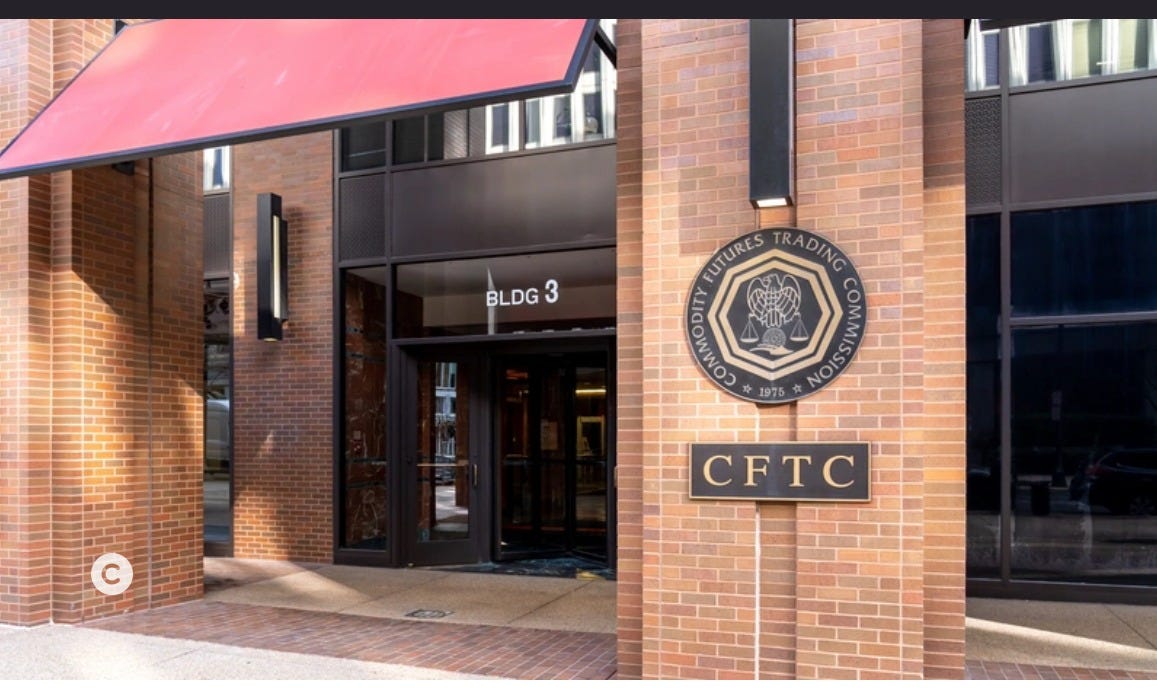
What happens when the regulator who helped launch Bitcoin futures returns just as crypto regulation is about to accelerate?
That single question sits at the heart of one of the most important regulatory developments in the US crypto market today.
The US Commodity Futures Trading Commission (CFTC) has confirmed that Amir Zaidi, a key architect of early crypto derivatives oversight, is returning as chief of staff under newly confirmed Chair Michael Selig. This move signals far more than a staffing change, it marks a strategic pivot as the US prepares for a clearer, more innovation-friendly crypto futures framework heading into 2026.
In this in-depth guide, we’ll unpack:
Why Zaidi’s return matters now
How Bitcoin futures shaped today’s crypto market
What this means for traders, institutions, and Web3 builders
Where US crypto regulation is heading next
Let’s get in
The Big Picture: Why the CFTC’s Leadership Reset Matters
The announcement on 31 December comes at a pivotal moment.
With Michael Selig now confirmed as permanent CFTC Chair and Caroline Pham’s interim tenure concluded, the agency finally has a stable leadership structure. At the same time, Congress is moving closer to passing digital asset market structure legislation, potentially placing the CFTC at the center of non-security crypto oversight.
In simple terms: the US is deciding who regulates crypto and the CFTC is positioning itself to lead.
Who Is Amir Zaidi and Why His Return Is Strategic
A Proven Architect of Crypto Futures
Zaidi isn’t new to crypto regulation. Between 2010 and 2019, he spent nearly a decade at the CFTC, most notably as:
Director of the Division of Market Oversight
Legal counsel to Chair Chris Giancarlo
Policy adviser to Commissioner Scott O’Malia
His most notable achievement?
Overseeing the certification of the first CFTC-regulated Bitcoin futures contracts in 2017 was a landmark moment that brought crypto into federally regulated US markets during President Donald Trump’s first term.
Real-World Impact Example
Before Bitcoin futures launched, institutional investors largely stayed away due to regulatory uncertainty. After 2017, firms like CME Group enabled hedge funds and asset managers to gain Bitcoin exposure without holding spot BTC unlocking billions in institutional participation.
From Regulator to Market Insider and Back Again
After leaving the CFTC, Zaidi joined TP ICAP, one of the world’s largest interdealer brokers, as global head of compliance.
This role gave him hands-on experience with:
Cross-border regulatory supervision
Capital and risk management rules
Market infrastructure oversight
Compliance across regulated trading venues
Why This Matters
Zaidi now understands both sides of the table:
How regulators think
How global financial markets actually operate
This dual perspective is critical as crypto derivatives scale globally.
Bitcoin Futures to Broader Market Structure
Zaidi’s return isn’t just about Bitcoin futures, it’s about market structure.
Over the past year, the CFTC has:
Authorized spot crypto trading on futures exchanges
Relaxed restrictions on prediction markets
Launched pilots for tokenized collateral
Used existing commodity authority to bring crypto onshore
Real-Life Parallel
Think of Bitcoin futures as the “training wheels” of crypto regulation. Once regulators proved they could oversee them safely, it opened the door to more complex products options, perpetuals, and tokenized derivatives.
CFTC vs SEC: A Clearer Division of Labor
As regulation evolves, a pattern is emerging:
CFTC → Non-security digital assets (Bitcoin, commodities, derivatives)
SEC → Token classification, disclosures, investor protection
This division reduces regulatory overlap and uncertainty, a major pain point for builders and investors alike.
Adoption Projection
Industry analysts estimate that over 60% of institutional crypto exposure by 2026 will be through regulated derivatives rather than spot holdings, placing the CFTC at the center of crypto’s next growth phase.
What Zaidi’s Appointment Signals for 2026
Chair Selig described Zaidi’s return as essential as Congress advances crypto legislation. Zaidi himself promised a “steady hand” during rapid market change.
Here’s what that likely means:
Faster approval of regulated crypto derivatives
Clearer compliance pathways for exchanges
Increased institutional confidence
Reduced offshore migration of crypto trading
Step-by-Step: How This Impacts Market Participants
For Crypto Traders
Expect more regulated futures and options products
Lower counterparty risk on US-based exchanges
Improved market transparency and surveillance
For Web3 Builders
Design products aligned with CFTC commodity rules
Explore tokenized collateral and derivatives use cases
Prepare for clearer licensing requirements
For Institutions
Expand crypto exposure within compliance frameworks
Use futures for hedging volatility
Engage earlier with regulators during product design
Key Takeaways
Benefits
Stronger regulatory clarity for crypto futures
Increased institutional adoption
More innovation-friendly oversight
Risks
Short-term compliance costs for smaller firms
Possible jurisdictional conflicts with global regulators
Real-World Applications
Bitcoin futures for hedging
Tokenized collateral in derivatives markets
Regulated prediction markets
Future Outlook: Where US Crypto Regulation Is Headed
Looking ahead to 2026, expect:
The CFTC is set to become the primary regulator for crypto commodities
Growth in tokenized financial instruments
Increased collaboration between regulators and Web3 firms
A shift of global crypto liquidity back to US-regulated venues
The return of Amir Zaidi isn’t about the past, it’s about preparing the US for the next phase of digital asset markets.
Final Thoughts: A Defining Moment for Crypto Futures
The CFTC’s decision to bring back Amir Zaidi is a calculated move rooted in experience, credibility, and long-term vision.
It tells the market one thing loud and clear:
Crypto isn’t being pushed away, it’s being professionally integrated.
If you’re a trader, builder, or investor in Web3, now is the time to align with regulated crypto markets.
Stay informed, engage with policy developments, and design products that can thrive under the next generation of crypto regulation.
Want more deep dives on crypto regulation, futures markets, and Web3 innovation?
Subscribe to our weekly newsletter Because in crypto, the early informed don’t just adapt, they lead.
Join our WhatsApp channel to continue the conversation. For daily updates, follow us on all socials; Instagram, Twitter, Telegram, and TikTok.